
Financial Clarity: The Modern Guide to Accounting, VAT Tracking, and Enterprise ERP Systems in Rwanda
Financial Clarity
The Modern Guide to Accounting, VAT Tracking, and Enterprise ERP Systems in Rwanda
In Rwanda's fast-moving commercial ecosystem, financial opacity is the fastest path to operational failure. Whether managing a bustling retail chain in Nyarugenge, a manufacturing plant in the Kigali Special Economic Zone (KSEZ), a multi-branch hospitality enterprise, or a regional distribution network across East Africa, business leaders face an identical challenge: fragmented accounting ledgers, manual reconciliation errors, and delayed financial reporting drain profitability and stall growth.
As Rwandan enterprises scale, relying on disconnected desktop spreadsheets, manual paper receipts, or generic foreign software that fails to accommodate local commercial realities is no longer viable. At Initiative Tech Solutions (ITS) Ltd, we engineer the financial backbone of modern commerce through the Inzora Business Suite (IBS). In this comprehensive guide, we unpack the critical pillars of modern business accounting, statutory VAT tracking, multi-currency management, and how unified Enterprise Resource Planning (ERP) transforms financial governance in Rwanda.
"A business cannot outgrow the accuracy of its financial ledger. When accounting, inventory costing, and point-of-sale transactions exist in silos, leadership operates in the dark. Modern ERP software unites every commercial event into an unbreakable, real-time double-entry balance sheet."
Chief Engineer, ITS Ltd

1. Double-Entry Bookkeeping & General Ledger Integrity
At the core of statutory financial integrity lies the timeless standard of Double-Entry Accounting: for every financial transaction, debits must equal credits across the Chart of Accounts (COA). While basic bookkeeping applications allow manual entry tampering or single-entry cash logs, enterprise-grade ERP systems enforce strict cryptographic ledger rules.
01. Automated Journal Entry Generation
Every commercial activity—whether a point-of-sale till payment, a supplier credit invoice, or a warehouse write-off—automatically generates corresponding general ledger journal entries without requiring manual accountant intervention.
02. Immutable Audit Trails
Past financial transactions cannot be silently deleted or overwritten. Any necessary correction requires a formal reversal or credit note with complete user timestamp attribution, ensuring external auditors have total transparency.
03. Hierarchical Chart of Accounts
Tailored account structures categorizing Assets, Liabilities, Equity, Revenue, and Operating Expenses into multi-tier parent-child groupings that align seamlessly with international IFRS financial reporting standards.
04. Real-Time Balance Sheets & P&L
Executive financial statements (Profit & Loss Statements, Balance Sheets, Cashflow Reports) update instantaneously with every transaction, eliminating the traditional weeks-long month-end closing lag.

Figure 1: Financial controllers and internal auditors collaborating on structured general ledger reconciliations and tax reporting schedules.
2. Mastering VAT Tracking, Exemptions & Statutory Tax Schedules
Value Added Tax (VAT) management is a fundamental operational obligation for every registered business in Rwanda. Failing to properly differentiate between standard-rated sales, zero-rated exports, and tax-exempt goods leads to severe financial penalties, inaccurate tax filings, and cashflow discrepancies.
A robust enterprise ERP system provides automated tax calculation engines that isolate tax liability at the point of sale and purchase:
| Tax Classification | Applicable Rate / Structure | ERP Automated Workflow |
|---|---|---|
| Standard VAT (Output Tax) | 18% on standard taxable commercial goods & services. | Auto-calculates on sales invoices and posts to VAT Output Liability account. |
| Input VAT (Purchases) | 18% reclaimable tax on qualifying business procurement. | Captures supplier invoice VAT numbers and offsets against Output VAT obligations. |
| Zero-Rated & Exports | 0% tax rate on international exports and cross-border trade. | Flags export invoices with customs documentation tags for compliant declaration. |
| Exempt Goods & Services | Statutory tax exemptions (e.g., specific unprocessed agricultural goods, educational materials). | Prevents accidental tax charging at checkout and segregates non-taxable sales channels. |
| Withholding Tax (WHT) | Statutory withholding rates on public tenders and unregistered suppliers. | Auto-deducts WHT from vendor payouts and credits dedicated tax clearing accounts. |
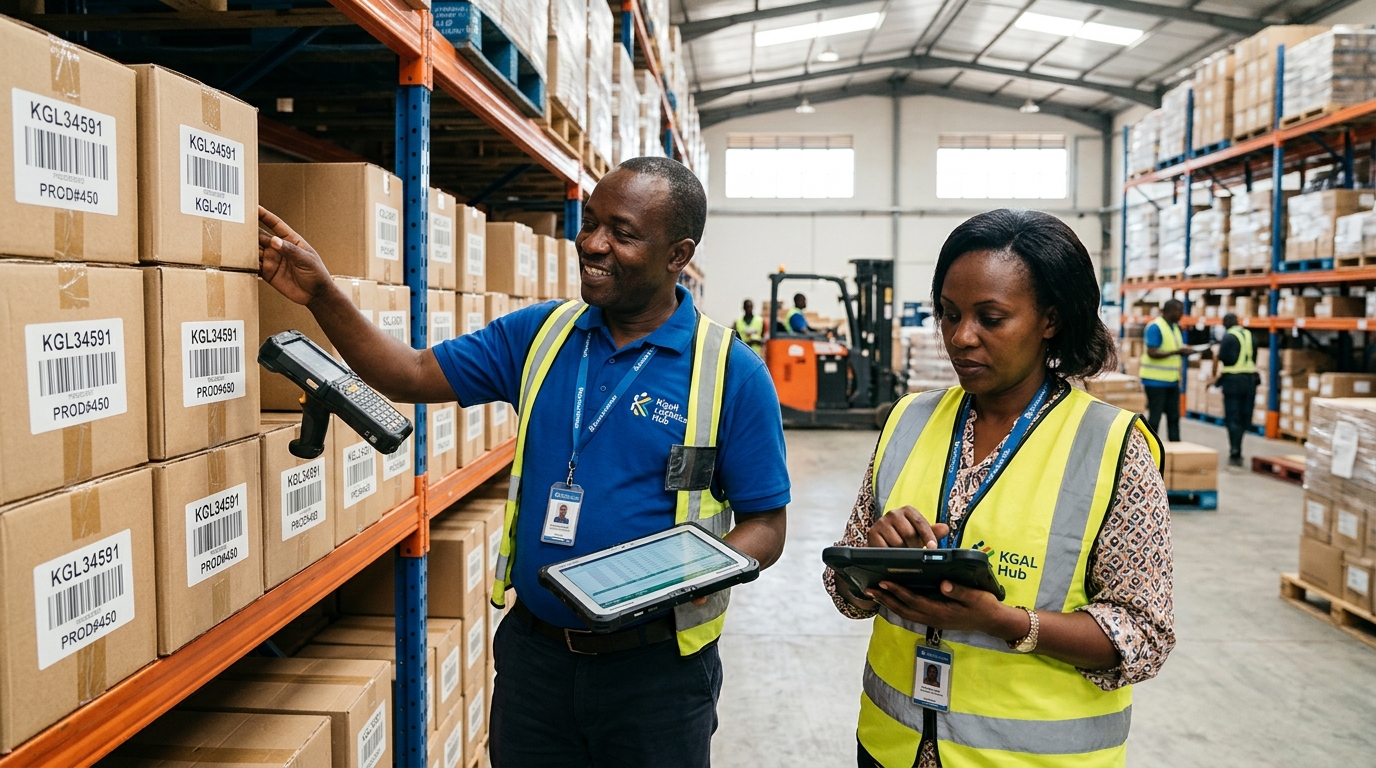
Figure 2: Real-time inventory valuation and warehouse barcode audits feeding accurate Cost of Goods Sold (COGS) into the financial ledger.
3. Real-Time Inventory Costing: FIFO vs. Weighted Average
For retailers, wholesalers, and manufacturers, inventory represents the largest component of working capital. Yet many businesses make pricing and purchasing decisions using outdated purchase cost assumptions, leading to artificial paper profits or unrecognized cash hemorrhages.
Modern ERP platforms employ Perpetual Inventory Valuation, updating the Cost of Goods Sold (COGS) in real time:
Ensures that the oldest inventory batches purchased are accounted for first when sales occur. Ideal for perishable consumer goods, pharmaceuticals, agrovet supplies, and cosmetics where batch expiration tracking is mandatory.
Recalculates unit costs dynamically each time new stock arrives at varying supplier rates or import duties. Essential for construction materials, hardware, electronics, and commodity trading subject to currency fluctuations.
Automatically distributes freight shipping, customs tariffs, clearing agency fees, and inland transport across product batch unit costs, establishing true gross profit margins before pricing.
Tracks inter-branch transfers between central warehouses and retail shops with strict dispatch-and-receive verification workflows, eliminating inventory shrinkage and undocumented stock losses.

Figure 3: ITS Ltd solutions consultants configuring unified multi-currency accounting and point-of-sale relays for enterprise deployment.
4. Multi-Currency Operations Across East Africa (EAC & AfCFTA)
Kigali’s strategic position as a regional trade gateway means modern Rwandan enterprises frequently trade across borders, executing transactions in Rwandan Francs (RWF), US Dollars (USD), Euros (EUR), Ugandan Shillings (UGX), Kenyan Shillings (KES), and Tanzanian Shillings (TZS).
Managing multi-currency business requires advanced foreign exchange accounting built directly into the ERP:
Daily Exchange Rate Buffering
Maintains historical daily FX rate tables, enabling sales invoices and purchase orders to be quoted in foreign currencies while automatically converting base bookkeeping ledgers to RWF.
Realized vs. Unrealized Foreign Exchange Gain/Loss
When a USD invoice issued at 1,350 RWF/USD is settled thirty days later at 1,370 RWF/USD, the system automatically posts the 20 RWF/USD variance to the Realized Forex Gain ledger without manual recalculation.
Multi-Channel Payment Reconciliation
Seamlessly reconciles settlements from corporate bank transfers, Visa/Mastercard merchant terminals, and domestic mobile money rails (MTN MoMo, Airtel Money) against open customer accounts receivable.
5. Why Generic Foreign ERPs Fail (And Why Local Engineering Wins)
Many businesses in Rwanda make the costly mistake of purchasing rigid, high-priced foreign software suites designed for Western enterprise markets. These implementations frequently fail due to structural mismatches:
Exorbitant USD Subscriptions
Recurring per-user USD licensing models create severe foreign exchange exposure and balloon operating expenditures as local headcounts expand.
Zero Offline Capability
Cloud-only systems halt entire retail checkout lines, warehouse dispatches, and point-of-sale registers whenever local fiber or telecom internet experiences temporary drops.
No Local Support Teams
Troubleshooting requires submitting overseas support tickets with days of waiting time, resulting in operational paralysis during critical business cycles.
The Inzora Business Suite (IBS) Advantage
Custom-engineered in Kigali by Initiative Tech Solutions Ltd, the Inzora Business Suite (IBS) provides an enterprise-grade ERP, POS, and financial management architecture built specifically for African commerce.
Offline-First Engine
Point-of-sale checkouts and inventory receipts continue seamlessly without internet; data auto-syncs securely once connectivity resumes.
Predictable Local Pricing
Eliminates foreign currency drain with transparent local pricing and lifetime perpetual licensing models tailored for scaling businesses.
Dedicated On-Site Support
Direct technical engineering support from our headquarters at Norrsken House Kigali with same-day on-site deployment assistance.
6. The 8-Point Financial Software Readiness Checklist
Before upgrading your company's financial software or migrating to an integrated ERP platform, evaluate your organization against these 8 core benchmarks:
Structure formal account codes for revenue streams, direct cost centers, administrative expenses, and tax liabilities.
Restrict journal approvals, credit note creation, and price override permissions to authorized financial managers.
Integrate digital statement imports to match bank balance sheets with daily cash drawer and merchant receipts.
Ensure warehouse stock counts and purchase receipts update Cost of Goods Sold (COGS) in real time.
View individual branch profitability as well as company-wide consolidated balance sheets on a single dashboard.
Enforce formal credit note and debit note issuance rather than silent invoice alterations to maintain audit compliance.
Implement automated, daily encrypted backups stored across secure off-site locations to protect historical accounting records.
Ensure all VAT calculations, withholding rates, and employee payroll tax tiers align strictly with statutory Rwandan frameworks.
Transform Your Enterprise Financial Operations
Ready to eliminate bookkeeping bottlenecks, automate inventory costing, and gain real-time financial clarity across your enterprise? Partner with Initiative Tech Solutions (ITS) Ltd at Norrsken House Kigali to implement the Inzora Business Suite (IBS) customized for your industry.
Article Intelligence
Strategic Alliance
Enterprise digital alignment requires tactical precision. Partner with the ITS Ltd implementation team.
Further Intelligence
Browse All Articles →
Accelerate Your Growth: Practical Strategies for Modern Business Expansion in East Africa
Scaling an enterprise across multiple branches, cities, or national borders is the ultimate test of business endurance. Discover the definitive strategies modern companies in Rwanda and East Africa use to accelerate expansion—mastering multi-unit inventory synchrony, working capital velocity, decentralized staff governance, and unified ERP architecture.

Starting and Scaling a Business in Rwanda: The Complete Digital, Legal & Tech Operations Guide (2026)
Rwanda is widely recognized as one of the world’s most dynamic and founder-friendly business destinations. Discover the complete blueprint for launching and scaling a business in Kigali: from 6-hour RDB incorporation and corporate banking setup, to statutory tax compliance, Data Protection (Law Nº 058/2021) adherence, and deploying unified enterprise ERP systems to automate operations from Day 1.