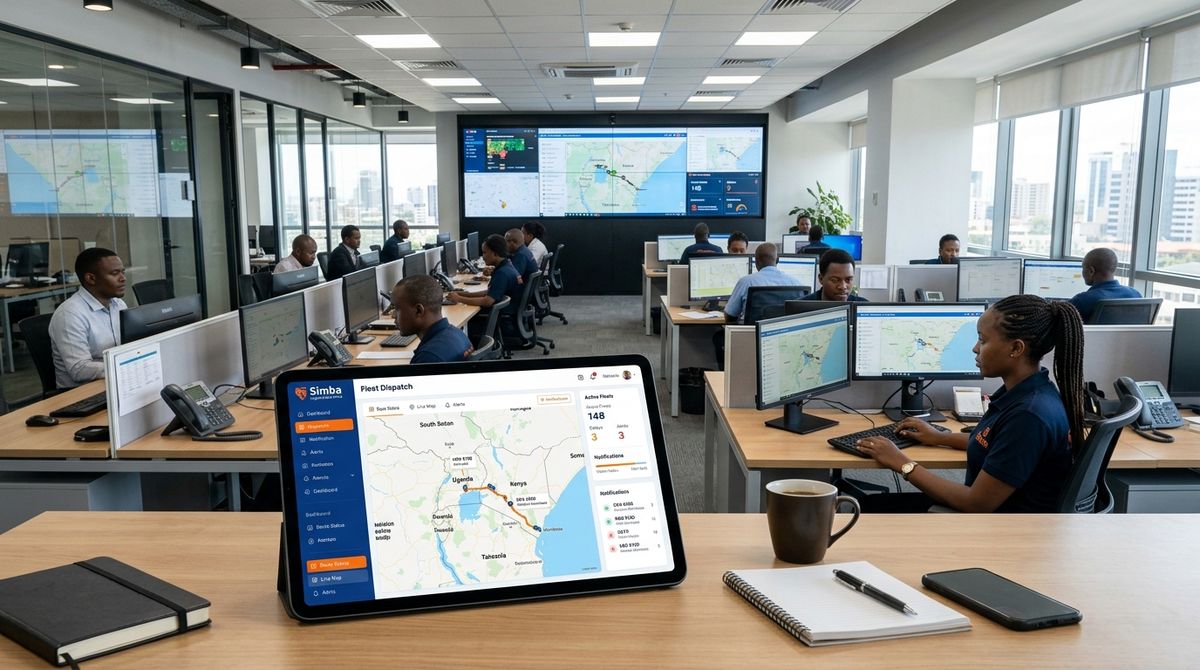
Driving Efficiency: Inside the IBS Logistics & Fleet Management Suite
Driving Efficiency
Inside the IBS Logistics & Fleet Management Suite
In the rapidly expanding commerce ecosystems of East Africa, distributing goods efficiently across city streets and long-distance transport corridors is an operational bottleneck. Businesses struggle with escalating fuel costs, unmonitored driver behaviors, unscheduled vehicle breakdowns, and manual dispatch workflows. At Initiative Tech Solutions (ITS) Ltd, we custom-engineered the Logistics & Fleet Management Suite within the Inzora Business Suite (IBS) to deliver total supply chain oversight.
By connecting fleet data directly to our unified enterprise resource planning (ERP) environment, IBS eliminates the need for separate telematics and accounting software. It integrates all critical data—from fuel pump logs and cargo manifests to mechanical inspections and driver performance metrics—into one single screen.
"Logistics isn't just about moving cargo from point A to point B; it is a high-stakes balance of asset maintenance, driver accountability, and cost control. We built the IBS Logistics module to give transport fleets a single platform to eliminate fuel waste, track shipments, and maximize fleet lifetime."
— Kenny Loi MUKIZA
Product Strategy Lead, ITS Ltd

1. Fleet Registries & Maintenance Vault
An unmonitored fleet is an expensive liability. The IBS Logistics Suite provides a comprehensive Fleet Registry that catalogs vehicle specifications, license documentation, insurance policies, and custom telematics configurations. Every vehicle is linked to a digital Maintenance Vault that logs service history, repairs, and spare parts replacement records.

Figure 1: Service managers tracking fleet vehicle wear levels and scheduling preventative maintenance alerts on the IBS dashboard.
The system dynamically schedules inspection intervals based on mileage trackers or time, triggering warnings for oil changes, brake pads, tire rotations, and annual insurance renewals. This proactive tracking prevents sudden breakdowns, extends the operational lifecycle of fleet vehicles, and reduces long-term maintenance costs.
2. Driver Operations & Performance Scoring
Driver behavior directly affects road safety and fuel economy. The Driver Operations module houses driver profiles, license verification logs, and trip schedules. When a driver is on a route, the system compiles trip duration, speed telemetry, and cargo handling reports.

Figure 2: Drivers utilizing mobile application dashboards to update trip milestones and review their safety scorecards.
IBS translates these telemetry inputs into a dynamic Driver Performance Score. By assessing speed compliance, harsh braking incidents, and fuel consumption efficiency, transport managers can identify high-performing drivers, address risky driving behaviors, and customize training programs.
3. Fuel Budgeting & KM/L Efficiency Logs
Fuel constitutes the largest ongoing operational expense for logistics teams. IBS helps companies control this expenditure with a dedicated Fuel Budgeting Engine. Transport managers allocate fuel quotas for specific trips, checking consumption against vehicle averages.

Figure 3: Fuel analytics chart in IBS modeling fuel efficiency metrics (KM/L) across active delivery trucks.
Drivers log refueling sessions directly, attaching photo receipts and logging current odometer values. The system automatically computes fuel economy in Kilometers per Liter (KM/L) and alerts management if a vehicle exceeds typical consumption tolerances, helping detect fuel theft or underlying engine issues.
4. Dispatch Waybills & Proof of Delivery (PoD) with Routes
To streamline order fulfillment, the IBS Dispatch Engine compiles digital waybills and cargo manifests. The system maps optimized routes for multiple delivery drops, reducing travel time and wear. Drivers use their mobile apps to check off waybills, upload digital signatures, and capture photos as Proof of Delivery (PoD), immediately syncing receipt status with customer service teams.
5. Third-Party Logistics (3PL) Carrier Registry & Rate Matrices
When company fleets are fully utilized, businesses must rely on third-party transport partners. IBS manages this through a 3PL Carrier Registry. The platform maintains profiles for external freight providers, storing their insurance records, route permits, and transport capacities. Additionally, it integrates complex Rate Matrices to calculate shipping charges automatically based on distance, cargo weight, volume, or vehicle type, ensuring precise pricing and billing.
6. Seamless Enterprise ERP Integration
The ultimate advantage of Inzora Business Suite is structural unification. The logistics engine connects directly to the core POS and accounting systems, updating inventory balances the moment a delivery waybill is signed. Driver payroll expenses sync with the HR system, and client shipping charges compile automatically onto customer ledger accounts.
7. Resilient Architecture & Localized Operations
Designed by Chief Engineer Irumva Yves Ngabonziza and supervised by Managing Director Clementine ISHIMWE, IBS keeps logistics operations functional under all conditions. Mobile SQLite database updates enable drivers to log trip events, fuel records, and signatures offline in remote zones, syncing once connected. Furthermore, the platform's multi-lingual system supports 13+ languages (including Kinyarwanda, Swahili, French, and English), facilitating communication across regional supply chains.
Optimize Your Fleet Operations
Ready to digitize your delivery routes, audit fuel costs, and monitor driver safety scorecard metrics with the Inzora Business Suite? Contact our logistics solutions team today.
Article Intelligence
Strategic Alliance
Enterprise digital alignment requires tactical precision. Partner with the ITS Ltd implementation team.
Further Intelligence
Browse All Articles →
Architecting NGO Impact: The Enterprise Operating Framework for Multi-Donor Grants, Humanitarian Supply Chains, and Remote Field Operations
International development programs, humanitarian relief agencies, and non-governmental organizations across Africa operate under intense operational complexity: managing restricted multi-donor funding, verifying last-mile aid delivery in disconnected rural terrains, and adhering to strict international audit standards. Discover how the Non-Profit & Development Edition of Inzora Business Suite (IBS) eliminates administrative overhead, enforces cryptographic fiscal compliance, and empowers social missions to maximize frontline impact.

IBS Management Made for Clinics: Do What Matters Most — Serve and Care for Them Smart and Fast
In primary care clinics, outpatient polyclinics, and specialty medical centers across Africa, administrative chaos directly steals time from patient care. Lost paper files, manual vitals recording, disconnected laboratory orders, and unaccounted dispensary stocks slow consultations down to a crawl. Discover how IBS Management equips clinical directors, doctors, and nursing teams to automate operations end-to-end, eliminate triage bottlenecks, and focus on what truly matters: providing swift, compassionate, and precise healthcare.